


Internal Bra Breast Surgery (GalaFLEX) in Vancouver
Changes in breast shape and position can happen over time, even after breast surgery. Pregnancy, breastfeeding, weight fluctuations, ageing, and gravity can stretch the skin and the supporting breast tissue. For some patients, this can lead to sagging breasts, changes in implant position, or a loss of fullness in the lower or upper portion of the breast.
An internal bra is a surgical technique that can provide additional support, and can be used during certain breast procedures. Rather than being a separate operation, it is used alongside surgery such as breast augmentation, breast lift, but most commonly breast revision. The internal support reinforces breast tissue in areas that may benefit from additional structural support. At Pacific Plastic Surgery Group in Vancouver, our surgeons can discuss with you whether an internal bra technique is appropriate for your individual needs and surgical goals.
What Is an Internal Bra?
An internal bra is a supportive surgical scaffold placed beneath the breast tissue during another breast procedure. It is intended to reinforce the lower portion of the breast, often near the breast fold, where skin and soft tissue can experience significant tension. The scaffold acts as an internal support structure while the body heals. Unlike a traditional surgical bra, which is worn externally during recovery, an internal bra is positioned within the breast during surgery. It does not function as an implant and is not intended to add breast volume. Instead, it provides temporary structural support to hold the breast tissue or implant in the planned position while healing occurs.
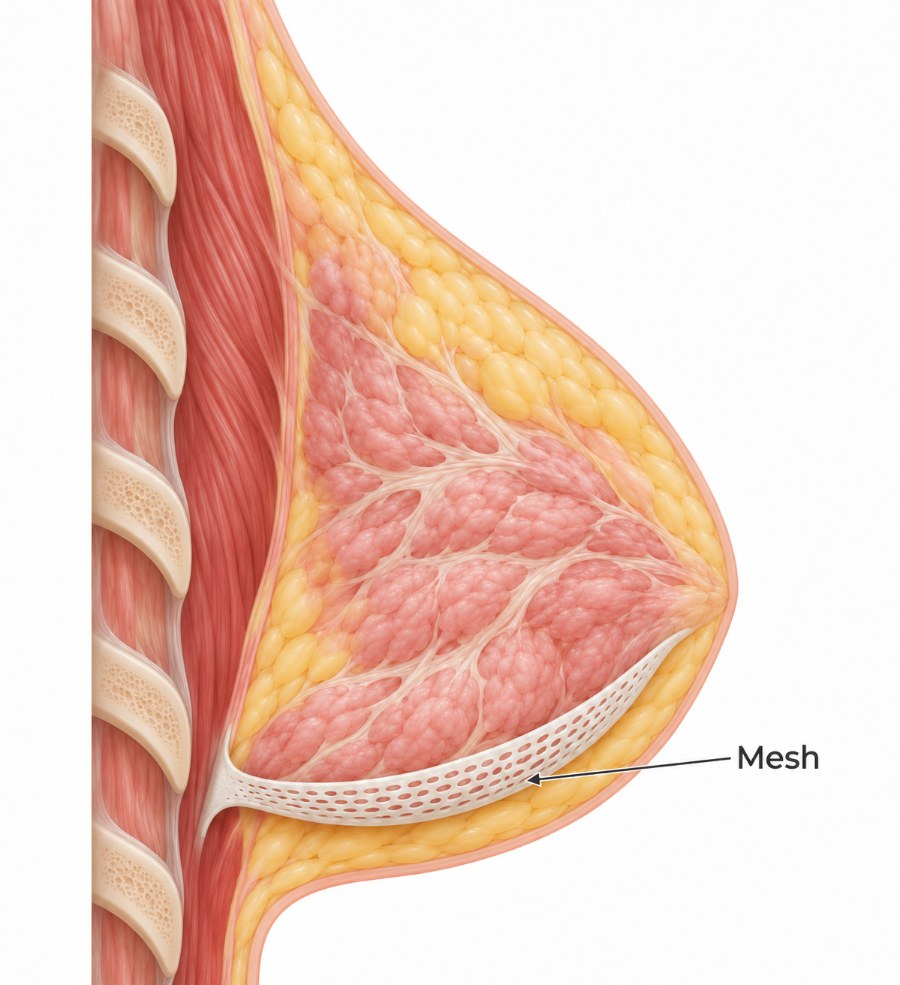
GalaFLEX is made of an absorbable mesh material. As healing progresses, the body gradually absorbs the material while natural tissue grows into and around the scaffold. The goal is for the patient’s own tissue to provide longer-term support after the material is absorbed.
Internal Bra With Revision Breast Surgery
Breast implant revision surgery may be recommended when implants have shifted, the breast shape has changed, or the surrounding tissue no longer provides adequate support. One concern is bottoming out, which occurs when an implant moves too far down the chest, stretching the lower breast tissue and changing the position of the breast fold.
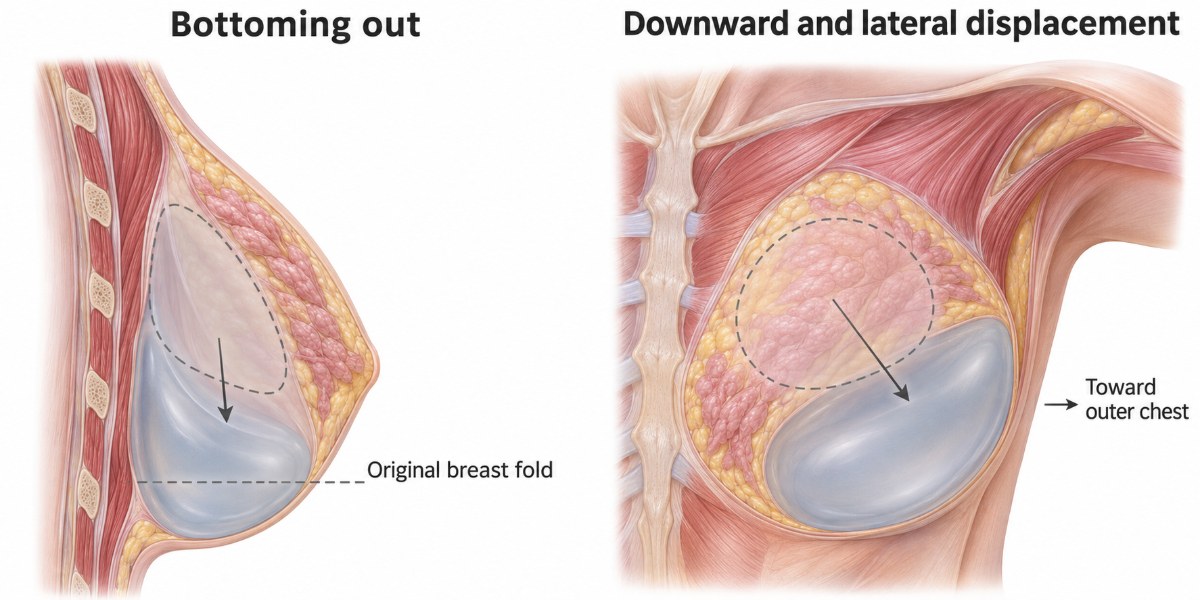
A surgeon may consider an internal bra during revision surgery when the lower breast tissue needs reinforcement. It can be used as part of a broader surgical plan to address implant position and support the breast contour.
Potential reasons a surgeon may consider this approach include:
- Bottoming out: When an implant has descended below its intended position, an internal scaffold may help reinforce the lower breast during corrective surgery.
- Implant malposition: When an implant has shifted from its intended position, the surgeon may need to adjust the implant pocket and consider additional support.
- Thin or stretched breast tissue: Patients with thinner tissue or reduced tissue quality may need more structural support to help maintain the planned breast shape.
- Changes after previous surgery: Revision procedures can involve tissue that has already been stretched, altered, or weakened by an earlier operation.
- Capsular contracture repair: When treating capsular contracture, the surgeon may also need to address implant position or surrounding tissue support. An internal bra is not a treatment for capsular contracture itself, but may be considered if additional support is appropriate.
The internal bra technique is only one possible part of revision breast surgery. Depending on the concern, treatment may also involve implant exchange, removal of scar tissue, adjustment of the implant pocket, or a breast lift. We determine the appropriate approach after a thorough evaluation. For more information, visit our Breast Implant Revision page.
Other Procedures That May Use an Internal Bra
An internal bra is not limited to breast implant revision. In selected cases, a surgeon may use an absorbable scaffold, such as GalaFLEX, during other breast procedures when the breast tissue would benefit from additional support.
- Breast augmentation: During breast augmentation, implants increase breast volume and change the breast contour. Consider an internal bra when the patient’s tissue needs additional support around the implant, particularly in the lower pole. It is not routinely necessary for every augmentation.
- Breast lift with implants: An augmentation mastopexy combines breast implants with a breast lift. The lift removes excess skin and repositions the breast tissue and nipple, while the implants add volume. Because the procedure changes both breast position and volume, some patients may benefit from additional internal support. Consider an internal bra when tissue quality, implant weight, or the surgical plan makes reinforcement appropriate.
- Breast lift (mastopexy): A standard breast lift addresses low-sitting breasts by removing excess skin and reshaping the remaining breast tissue and raising the nipple to a higher position on the breast. In selected patients, an internal bra may provide additional support to the lower breast during healing. It does not replace the lift itself or eliminate the effects of aging and gravity.
- Breast lift with reduction: Breast reduction surgery removes breast tissue and excess skin to reduce breast volume and reshape the breasts. In certain cases, an internal scaffold may be considered when additional support is needed after the breast has been reshaped. The decision depends on the patient’s anatomy and the surgeon’s assessment.
Who Is a Good Candidate for an Internal Bra?
An internal bra may be appropriate for some patients undergoing breast surgery, but it is not necessary or suitable for everyone. The decision depends on the condition of the breast tissue, the procedure being performed, and the amount of support required.
Your surgeon may discuss an internal bra technique if you:
- Have experienced implant bottoming out or other forms of implant malposition.
- Have loose skin or stretched breast tissue following pregnancy, breastfeeding, weight changes, or previous surgery.
- Have thinner breast tissue or concerns about the strength of the lower breast support.
- Are considering revision surgery to address changes in breast position or contour.
- Are planning a breast lift with implants and have concerns about tissue support.
- Have heavier implants or breast volume that places additional demands on the supporting tissue.
A consultation is needed to determine whether an internal bra is appropriate. Your surgeon will consider your medical history, breast anatomy, tissue quality, previous procedures, and desired outcome. They will also discuss what the technique can and cannot accomplish so you can make an informed decision with realistic expectations.
Potential Benefits of the Internal Bra Technique
The purpose of an internal bra is to provide additional structural support during breast surgery. When used appropriately, it may help reinforce tissue that is under tension and support the planned breast contour as healing progresses.
Depending on the procedure and the patient’s anatomy, potential benefits may include:
- Additional lower-pole support: The scaffold may reinforce the tissue near the breast fold, where stretching can contribute to bottoming out.
- Support for implant placement: When used during revision or augmentation, it may help support the intended implant position.
- Reinforcement of thinner tissue: It may provide additional support when the patient’s natural breast tissue is not sufficient on its own.
- Support during breast reshaping: It can be incorporated into selected breast lift or reduction procedures when extra reinforcement is considered beneficial.
An internal bra does not immediately lift the breast, add volume, or change the appearance in the same way as an implant or breast lift. The overall breast shape is determined primarily by the main surgical procedure. The scaffold is intended to provide support during healing, not guarantee a particular appearance or prevent future changes.
The Internal Bra Procedure and Recovery
An internal bra is placed during the breast operation rather than performed separately. The surgeon positions the scaffold mesh beneath or alongside the breast tissue, according to the surgical plan and the product’s intended use. The internal bra placement may add time to the surgery. The procedure is performed under a general anaesthetic, the same anesthetic as the accompanying breast surgery, and the overall recovery period is generally guided by the extent of that operation.
Recovery after a breast lift, augmentation, or complex revision can differ, so there is no single timeline that applies to every patient. However, adding internal bra to any surgical plan does not lengthen the recovery period. After surgery, you will receive instructions about incision care, activity restrictions, and wearing a supportive bra. Most patients need to limit strenuous activity and avoid heavy lifting while the breast tissue heals. Follow-up appointments allow your surgical team to monitor healing, assess breast position, and address questions or concerns. Your surgeon will provide specific recovery instructions based on the procedures performed.
Risks and Considerations
As with any surgical procedure, using an internal bra involves potential risks. These may include complications associated with the main breast operation as well as issues related to the implanted scaffold. The specific risks depend on the material used, its placement, the patient’s health, and the complexity of the surgery.
Possible considerations include infection, bleeding, fluid collection, delayed healing, discomfort, or changes in sensation. Some patients may be able to feel or notice the material beneath the skin, particularly if they have thin breast tissue. Additional surgical time may also be required.
Absorbable scaffolds, like GalaFLEX, are designed to break down over time. The absorption process varies by material and should be discussed with your surgeon. The scaffold is not a permanent implant, and its use cannot guarantee long-term breast position or prevent future sagging. Natural ageing, gravity, pregnancy, and weight changes can continue to affect breast shape.
Why Choose Pacific Plastic Surgery Group?
Choosing a surgeon for breast surgery involves more than selecting a technique. Your surgeon should understand how breast tissue, skin quality, implant position, and breast proportions work together when planning an operation. Pacific Plastic Surgery Group provides breast surgery consultations in Vancouver for patients considering augmentation, breast lifts, reductions, and revision procedures. The group’s FRCSC board-certified plastic surgeons assess each patient’s anatomy, medical history, and goals before recommending a surgical approach.
Whether you are exploring revision surgery after a previous breast operation or considering a breast lift or augmentation, an in-person consultation is an opportunity to discuss your concerns and understand the available options.
Book an Internal Bra Consultation in Vancouver
If you are considering breast augmentation, a breast lift, or revision surgery and want to learn whether an internal bra may be appropriate, the surgeons at Pacific Plastic Surgery Group can discuss your options. During a consultation, your surgeon will assess your breast tissue, review your surgical history, and explain whether additional internal support may fit into your treatment plan. Contact Pacific Plastic Surgery Group to book a consultation in Vancouver, BC.
Frequently Asked Questions
Is an internal bra permanent?
Can I feel an internal bra after surgery?
Is internal bra breast surgery safe?
Does an internal bra add to the cost of breast surgery?
Can an internal bra be used during breast revision surgery?
Is GalaFLEX the same as an internal bra?
Does an internal bra replace the need to wear a surgical bra?
Request a Consultation
You deserve the best solutions to achieve your positive body image. Consult with top plastic surgeons in Vancouver and rest of BC.
